Pedicures With Diabetes: A Checklist Before You Book
A salon pedicure can be perfectly reasonable with diabetes, and it can also be the wrong call. What to ask your doctor, and what to tell us.
6 min readBy the Utopia Nails Spa team

The short version. Ask your doctor first — especially about neuropathy and circulation. If you are cleared, tell your technician, ask for no blade work and no aggressive callus removal, and check your feet afterwards. If you have reduced sensation or a current wound, a podiatrist is the right place, not a salon.
Why it needs a moment’s thought
Diabetes can reduce sensation in the feet and slow healing. Those two together are what make a small nick significant: you may not feel it happen, and it may take longer to close. That is the whole of the concern, and it is why the advice is caution rather than avoidance.
Health bodies including the American Diabetes Association and the NHS advise people with diabetes to have feet checked regularly and to be careful with anything that cuts or abrades the skin.
Questions for your doctor, not for us
Do I have any loss of sensation in my feet? Neuropathy is the single most important factor, and it is not something you can reliably self-assess.
How is the circulation in my feet? Reduced blood flow slows healing.
Given my current control and any history of ulcers, is a salon pedicure reasonable, or should I be seeing a podiatrist for foot care?
If the answer to that last one is podiatrist, that is not a brush-off. Medical foot care is a different service to a cosmetic pedicure, and for some people it is simply the right one.
What to tell us when you book
That you have diabetes. It changes how a technician works and it is not something we need details about beyond that.
That you would like no blade or cutting work on callus, and gentle filing only. This should be true for everyone, and it matters more here.
That cuticles should be pushed back rather than cut. An intact cuticle is a seal against infection.
If you have any numbness, say so explicitly, because it means you cannot be relied on to feel discomfort as a warning.
What good practice looks like on our side
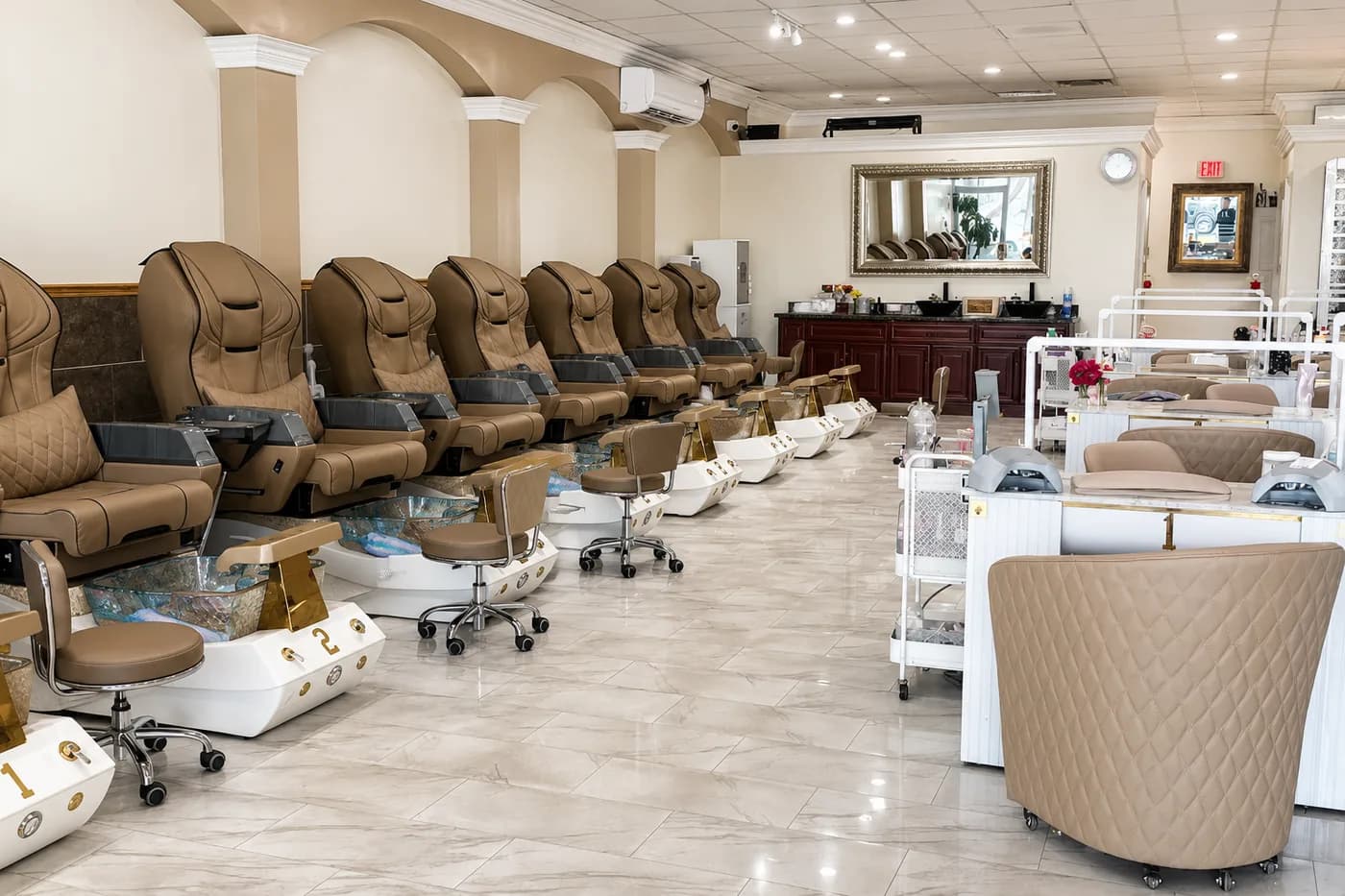
Metal implements sterilised in an autoclave between guests; files, buffers and toe separators single-use and discarded. Pipeless pedicure chairs, which drain and disinfect completely rather than recirculating water through internal plumbing.
Water kept comfortably warm rather than hot — worth stating if sensation is reduced, since "comfortable" is harder to judge.
You are welcome to ask to see the sterilisation setup before you sit down, here or anywhere else.
Afterwards
Look your feet over, or have someone look, within a day — the tops, the soles and between the toes. Any redness, break in the skin, or area that feels warm is worth a call to your doctor rather than a wait-and-see.
This is general information about how to approach a pedicure safely, not medical advice, and it does not replace what your own clinician tells you about your feet.